DISClAIMER: Website Not Mobile Compatible


Why Was The Half Life
Franchise So Revolutionary?
First of All, Who Are


_edited_edited.png)
Valve, if you play video games, should be no stranger to you. This company is one of the largest and most successful game development companies to date. They own the most popular online game store, steam which as of writing is sitting at a whopping 32 million concurrent users! Isn't that nuts?! They also have many iconic game franchises under their belt. Games such as Left 4 Dead, Portal, Counter Strike, Team Fortress and most notably Half Life.

Gabe Newell

's Humble Beginnings
Two former Microsoft employees, Michael Harrington, and the big man himself Gabe Newell founded the company Valve on the 24th of August 1996. They believed that gaming would be the next big form of entertainment and decided they wanted to invest and develop new technologies and games to be at the forefront of the industry. They didn’t know what to expect for the future of the company and were very sceptical about how well it would do. However, after believing the company didn’t have much of a chance to flourish, they soon found success in their first ever released product. That product being Half Life.
Michael Harrington
So, let’s get to the matter at hand. Half Life, why is it considered a masterpiece and why was it thought to be revolutionary? Well let’s go back to the year 1993. Doom had just released and was taking the world by storm. It was one of the first first person shooters and set the standard for the genre. If you've played Doom, you'll know that the game had very little emphasis on storytelling and focused primarily on the action. You're put right into the game with no context as to why you're there and the game's just like "here’s a pistol and some monsters, now get to blastin”. Most games strived to be this way and it really showed at the time.

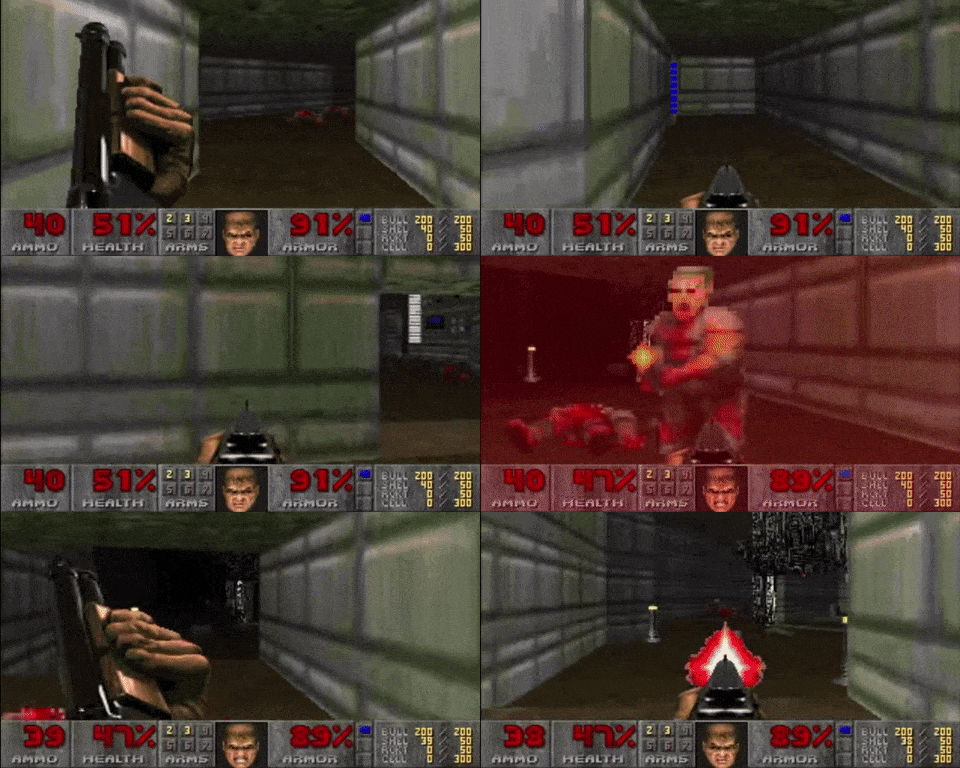
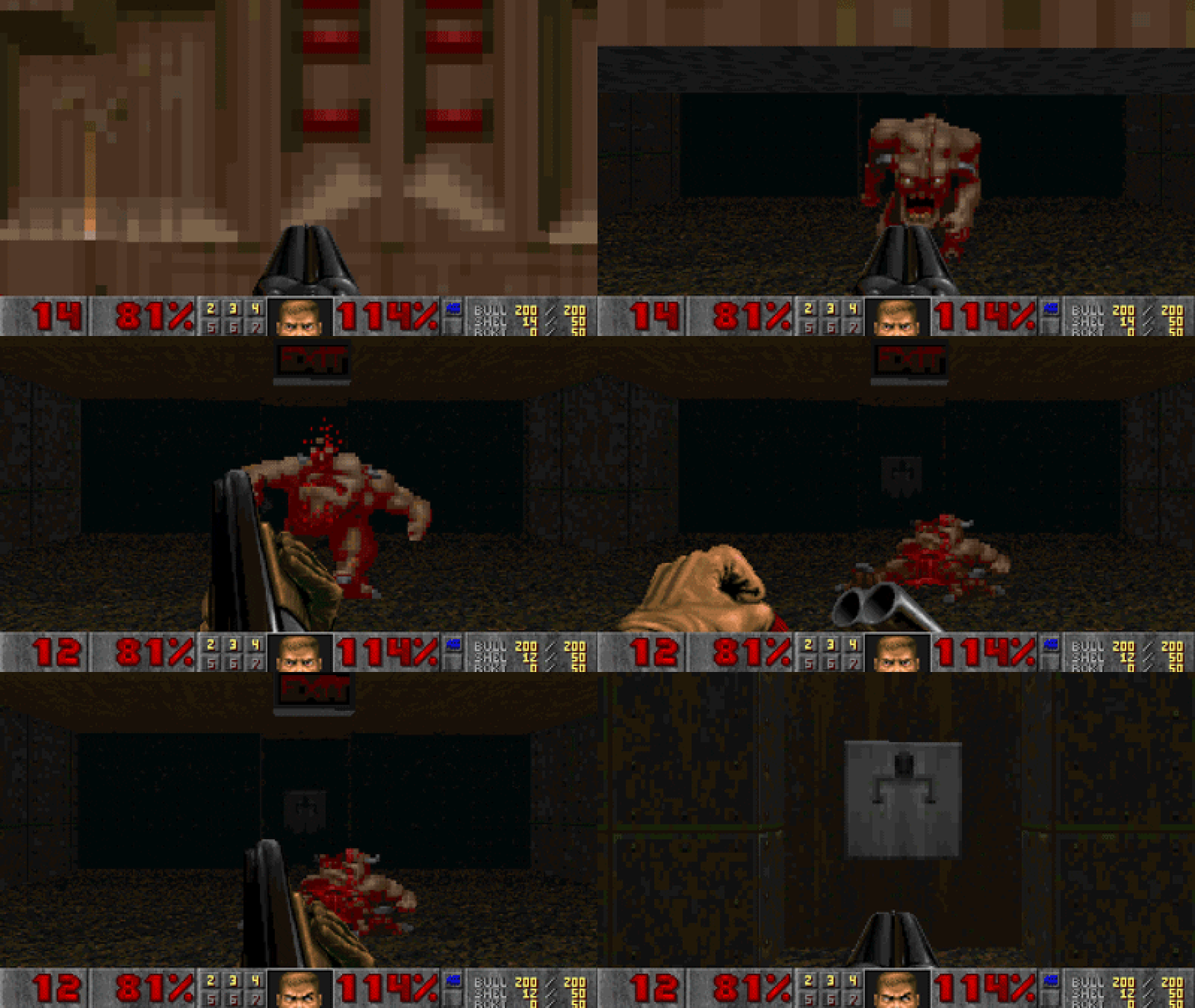
Doom clones were absolutely
everywhere


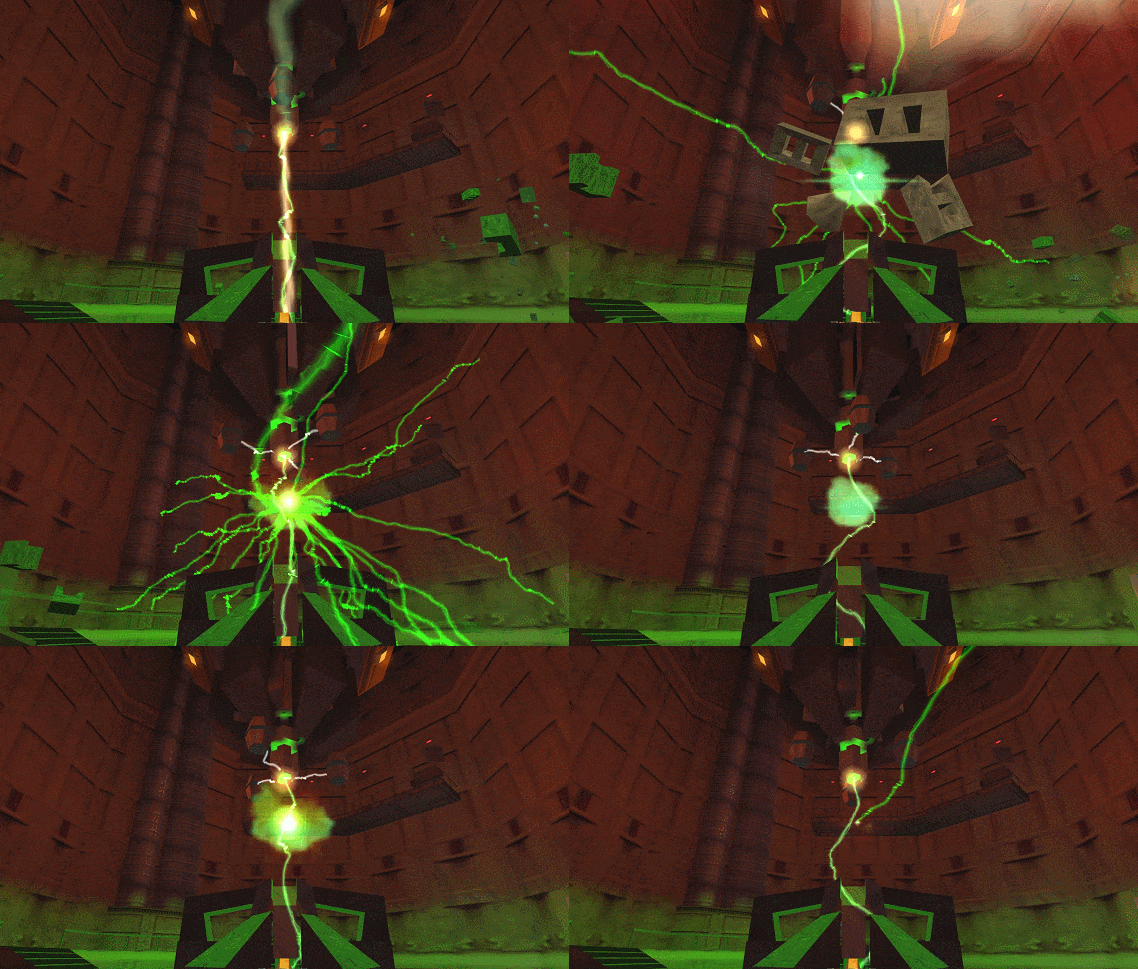
On the 19th of November 1998 everything changed. Valve released Half Life and changed the gaming world as we know it. People from around the world were booting up Half Life on their computers and instantly blown away by how unique the game was. The new take on storytelling was refreshing. Its creative blend of first-person shooter gameplay and engaging story revolutionised the way games were made and played, setting a new standard for the genre. Its influence can still be seen today, with many modern games drawing inspiration from its ground-breaking mechanics and immersive world-building. Half-Life remains a beloved franchise, cherished by fans and respected by the gaming community for its contributions to the industry. The game was spreading like a wildfire and sitting at over 9 million sales. Which at the time was extremely impressive.
When you look at Half Life gameplay nowadays, you’d probably wonder what all the hype was about. Whilst you could argue the gameplay and graphics makes it seem like it’s not worth going back to, I would be lying if I said I didn’t suggest trying it. The game has a lot of charm and I think that it’s really interesting playing a game that redefined a genre. Its like going to a museum and looking at all the history, in this case looking at what systems and features games after Half Life take from it.
The gameplay at the time was different from all the other shooters. Half Life managed to combine puzzles and first-person shooters together. The puzzles aren’t too complex as they aren’t the games main focus. It’s more so problem solving, for example in the game you’re able to drag boxes around and within the game there is a corridor with a hole in the ceiling and a ladder just out of reach. There are also two boxes that sit right underneath the ladder. All three boxes consisting of different sizes. One small and one big. To progress through the game, you need to drag these boxes next to each other to create makeshift stairs. This is one of many examples.
This aspect of Half Life is what shines most. The bread and butter of why it became so successful. The environmental storytelling is remarkable. I mean look no further than the iconic tram scene that takes place at the beginning of the game. It’s a great introduction to Black Mesa’s lab. The environment that you’ll be playing in for most of the game. Everything around you is bustling with life. Everywhere you look something is happening. You have robots and machinery working, Security guards patrolling the place, Scientists, well… doing science things. It truly is a sight to behold.
And what makes this experience even better is Valve’s approach to storytelling. Valve tries to avoid using any cutscenes, so the player maintains control. This in turn makes the player feel more immersed because they don’t feel as if they are just an observer and are actually the character in the game. This also makes the player feel more emotionally invested into the story and the characters. Ultimately leading to a more satisfying game experience. The only cutscene I know of in this game is when two soldiers capture you and even still the cutscene was really short and makes sense since Gordon was incapacitated.
The enemy AI in Half Life doesn’t pull any punches. Specifically, the soldiers that you meet later in the game. These smart cookies actually plan and strategize. Which in of itself is already a big step up from game titles before. I’m going to go on a limb here and say they’re probably even smarter than 90% of AI in modern day titles. Modern AI having the average intelligence of a baby fresh out the womb. Enemy soldiers have a plethora of tactics to try and kill you. They’ll flank you, they’ll push you, they’ll flee, when injured or singled out and they’ll push you out of cover with a grenade. The game even has a squad system. The squads have up to four soldiers, one being the leader and they relay information to each other. Information such as where the player is located. Games at the time had nowhere near the amount of depth this AI had. Most AI at the time consisted of very simple behaviour. The animalistic enemies such as headcrabs, zombies and houndeyes, have a much simpler, less complex ai. They just chase you in hopes of killing you.

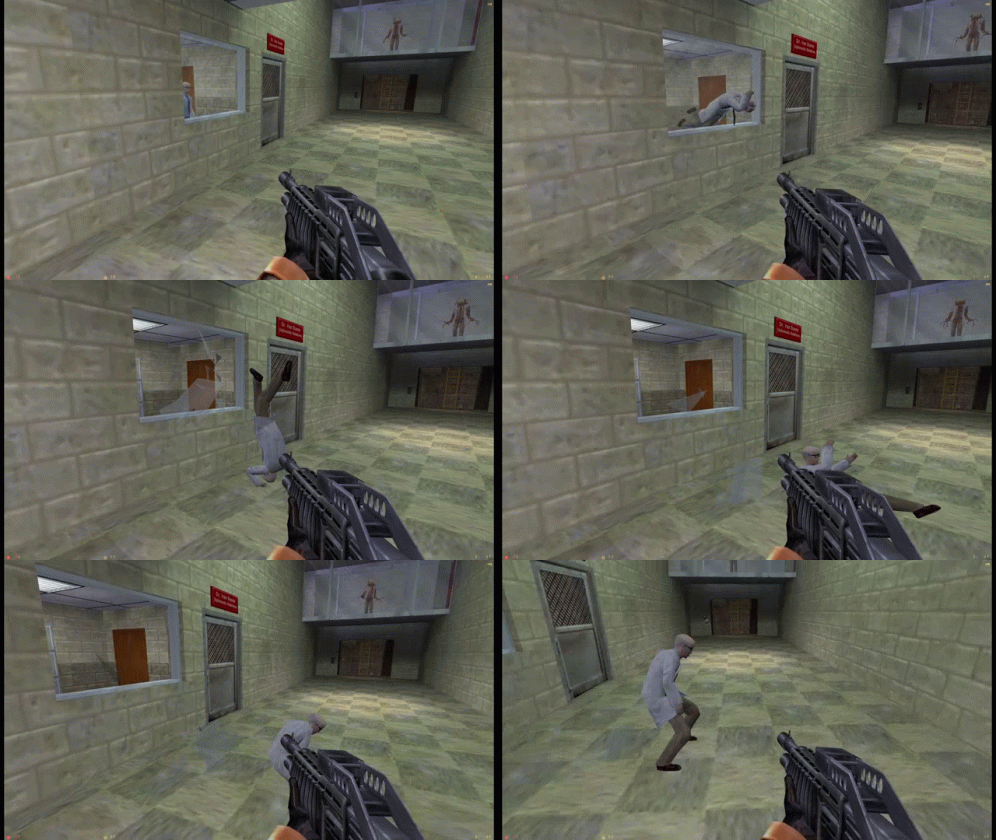
On the topic of AI the npc’s are very life like. Reacting to the things you do as a normal person would. For example, they’ll react to you interacting with a button that triggers an alarm,
they’ll react to you looking at something you shouldn’t be looking at,
you can turn off lights. Turns out scientists are scared of the dark,
and you can blow up a meal that was cooking in a microwave. Understandably annoying the scientist that was waiting for it to finish.
Valve have mastered the art of pacing. Using techniques and game design to keep the player interested. As you progress through the game you gradually get introduced to new weaponry and game mechanics. Opening up more opportunities to get creative and try different play styles. The levels in this game are very cleverly designed. Presenting clear objectives and constantly creating new challenges and obstacles for players to overcome. The environments and enemies change to keep the players interested. There are three main sections. The Black Mesa lab, The surface above Black Mesa and Zen. These three levels introduce new enemies and force the player to use different tactics. Also encouraging them to use different weapons so they don’t constantly use the same .357 magnum on every enemy.